

Instagram for Introverts: How to Use Social Media Without Burning Yourself Out – The Nourished CEO Episode 77


Somewhere along the way, having a social media presence for your business started to feel suspiciously similar to signing up for a second job.
You’re supposed to film Reels, write captions, post Stories, follow trends, find the right audio, make carousels, respond to comments, check your analytics, and somehow keep up with whatever the algorithm decided it cares about this week.
Meanwhile, you still have clients to serve, offers to improve, a business to run, and (ideally) a life that happens somewhere other than inside your phone.
I understand why so many established coaches, consultants, and service providers have a complicated relationship with Instagram. Yes, I certainly do.
I see the value of social media in my own business. People discover me there, learn how I think, hear about my offers, and sometimes use my account as another point of reference after finding me somewhere else.
I just have absolutely no desire to organize my entire business around my willingness to constantly create content.
And I know I’m not alone in that.
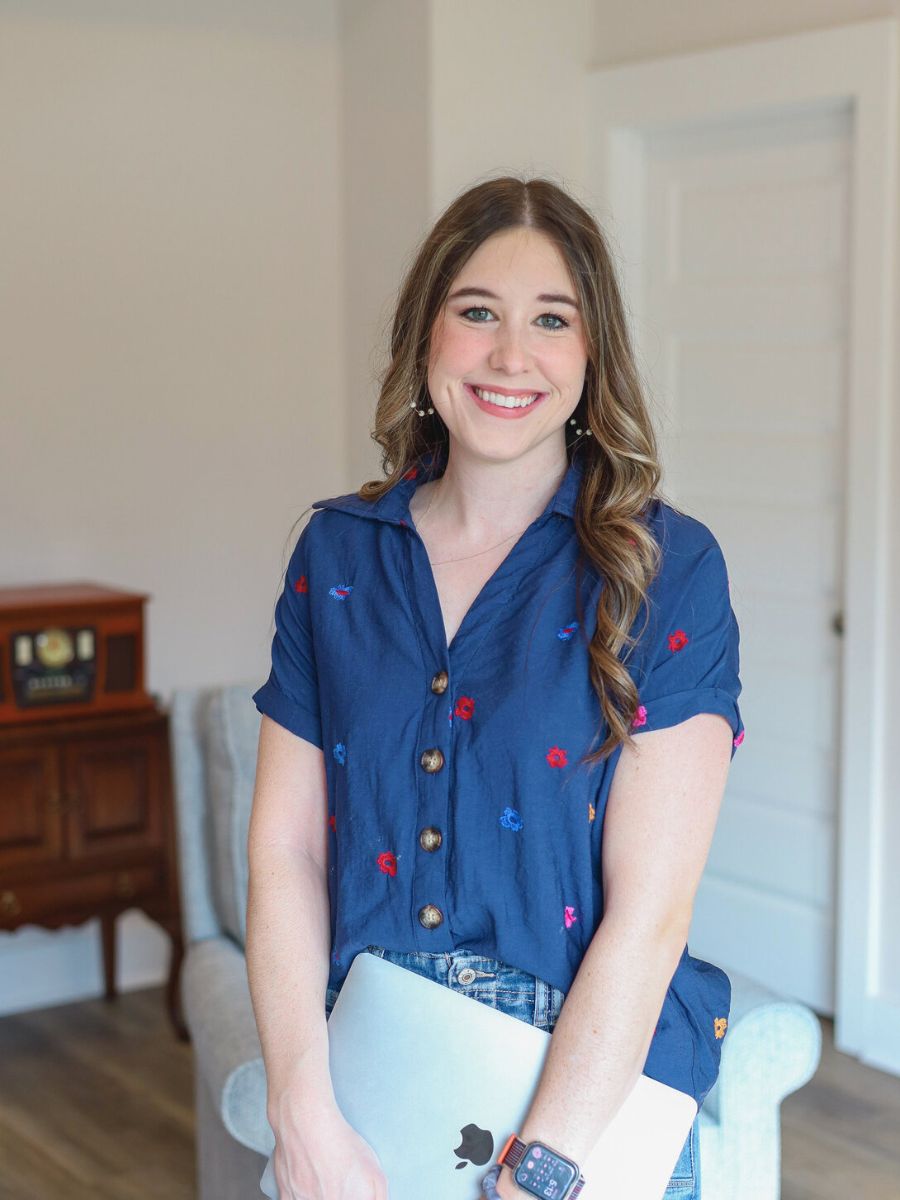
That’s why I invited fractional CMO and social media strategist Madelyn Victoria onto The Nourished CEO Podcast. Madelyn is also a self-described huge introvert, so our conversation wasn’t about forcing yourself to become louder, more performative, or more chronically online in the name of marketing.
Instead, we talked about how to make social media a useful part of your business without allowing it to become the center of your business.
LISTEN TO THIS EPISODE OF THE NOURISHED CEO PODCAST
Or listen and subscribe for free on your favorite app: Apple Podcasts | Spotify | YouTube Music
Attention Is Not the Same as Trust
Early in our conversation, Madelyn said something that I think should change the way a lot of business owners evaluate their social media:
“Attention is not the same as trust.”
That distinction is easy to lose when so much Instagram advice centers on reach. We’re constantly being told how to get more views, more followers, more shares, and more viral content, so it’s natural to start treating those numbers as proof that a strategy is working.
But getting a lot of people to look at you and getting the right people to trust you enough to work with you are not the same outcome.
Madelyn has seen both sides of this in her client work. She’s managed accounts with relatively small audiences whose owners were doing extremely well in business and working with great clients.
She has also seen people with large followings or recent viral content who weren’t turning that attention into meaningful business results. As she put it, “Anybody can really go viral, but retaining those people or getting aligned people, that’s a lot harder.”
That doesn’t mean reach is useless. People obviously need some way to discover you before they can ever become a client. The problem is when reach becomes the entire strategy.
Social media can do more than introduce you to strangers. It can nurture people who already know you, demonstrate your expertise, reinforce your credibility, help someone understand your point of view, and give potential clients a low-pressure way to spend more time in your world. It can also move people toward assets you have more control over, like your email list, podcast, website, or offers.
That’s a much more useful way to evaluate Instagram than simply asking whether your last Reel got enough views.
Build a Posting Rhythm You Can Actually Maintain
One of Madelyn’s biggest recommendations for business owners who feel drained by social media is also one of the simplest: stop assuming consistency means posting constantly.
She typically recommends starting with two or three strong posts per week. That isn’t because three posts unlock some magical algorithmic reward. It’s because most business owners are far more likely to maintain that pace than a daily content schedule they resent after the first week.
Madelyn told me, “I would much rather you post two, three times a week rather than five days a week one week, and then two days a week the next week, and then nothing the week after that.”
I think that principle matters well beyond Instagram. So many of us build strategies around what we think we should be capable of doing rather than what fits our actual businesses and lives.
Then when we can’t sustain the pace, we interpret that as a discipline problem instead of questioning whether the original plan made any sense for us.
If posting every day works for you and serves a clear purpose, great. But if you’re running an established coaching, consulting, or service business, you probably didn’t build the company because your deepest desire was to spend every afternoon making Instagram content.
Social media is one marketing tool among many, and the amount of time you devote to it should reflect the role it actually plays in your business.
A simpler rhythm that you can maintain for months is often far more useful than an aggressive schedule you can maintain for eleven days.
Stop Treating Instagram Like a Separate Content Universe
Another major source of social media fatigue is the belief that every platform requires a completely new set of ideas.
It doesn’t.
If you already write emails, publish blog posts, record a podcast, teach workshops, answer client questions, have sales conversations, or explain your work to potential clients, you already have content.
Your job is not necessarily to create more ideas; it’s often to recognize the ideas you already have and adapt them to a different format.
Madelyn regularly repurposes longer-form content into Instagram posts. A blog article might become a carousel. An email might become a talking Reel. A question from a client or someone in her DMs might become a short educational video. A strong case study could easily turn into several pieces of content across multiple platforms.
This is one of the easiest ways to reduce the mental weight of social media because you’re no longer opening Instagram three times a week and demanding that your brain produce something brilliant on command.
Instead, you can start with work you’ve already done and ask a much easier question: How could I communicate this idea here?
That distinction matters. Creating from zero takes considerably more effort than repackaging something you already understand deeply.
It also creates more consistency in your messaging. If the same core ideas appear in your emails, podcast, website, and social media in slightly different forms, people get repeated exposure to what you believe and what you help with.
You don’t need to reinvent your expertise every time you open a new app.
Use Content Formats That Reduce Resistance
Repurposing your ideas is one part of making social media easier. The other is giving yourself permission to stop using the formats you think you’re supposed to use all the time.
Talking-head videos can absolutely be valuable. Seeing someone’s face and hearing their voice can help create familiarity, and Madelyn still uses and recommends them. But that doesn’t mean every useful piece of content requires you to turn on the camera and perform.
Her more introverted clients often gravitate toward carousels, case studies, B-roll, voiceovers, storytelling captions, and Instagram Stories. Those formats can still communicate expertise and personality without requiring the same energy as filming yourself speaking directly to the camera every day.
And if talking videos are useful for your business but they drain you, Madelyn recommends batching them.
Rather than waking up every few days with the thought that you need to film another Reel, put one content block on your calendar, prepare several topics, film them together, and move on with your life.
I particularly liked her approach to scripting because this is an area where I personally tend to struggle. If I have no structure, there is a very real possibility I will still be talking five minutes later. But reading from a detailed script can create the opposite problem: you stay concise, but suddenly you sound like you’re reading a hostage statement.
Madelyn has found a middle ground. She uses an outline rather than scripting every word, often mapping out the hook and key points using the Storyboards feature in Instagram’s Edits app.
That gives her enough structure to keep the video moving without removing the spontaneity that makes someone sound like an actual human being.
The point isn’t to eliminate every uncomfortable part of content creation. It’s to stop adding unnecessary friction to a task that already isn’t your favorite.
Case Studies Might Be Some of Your Best Content
One part of our conversation that immediately made me think about my own marketing was Madelyn’s approach to case studies. I have plenty of client results and stories I could be talking about more often, and I know many business owners are in exactly the same position.
We tend to hear “case study” and imagine a giant polished feature about a client with an enormous, headline-worthy result.
But a useful case study can be much simpler than that. You can take one specific problem a client was experiencing, explain what you changed, walk through why you chose that strategy, and show what happened next.
Madelyn’s biggest advice here was straightforward:
“The more specific that you can be, the better when it comes to case studies.”
Instead of vaguely saying you helped a client improve their marketing, tell people what the goal was. Explain what you tried. Share what worked, what didn’t, and what surprised you.
If it’s appropriate and you have permission, include actual screenshots, examples, data, or pieces of the work so someone can see what you mean rather than simply taking your word for it.
The other important part is making the case study relevant to the person consuming it. The goal is not merely to say, “Look how great I am.” A strong case study gives the right prospective client the opportunity to recognize themselves in the starting point and understand how you think through problems like theirs.
That kind of content can do a tremendous amount of work before someone ever gets on a sales call with you. By the time they inquire, they may already understand what you do, how you approach it, and what kind of outcomes your work can support.
Make It Easier to Create Content Before You Need It
Some of my favorite tips from this episode were almost embarrassingly simple, which is usually a good sign.
For example: create a B-roll album on your phone.
Throughout your normal workday, periodically film little pieces of footage that could work behind text or a voiceover later. You might be working at your desk, making coffee, reviewing something on your computer, walking into your office, heading to a meeting, or doing something else that naturally fits your brand.
Save all of those clips in one place instead of letting them disappear into your camera roll.
Then, when you have something you want to say but absolutely do not feel like filming yourself talking, you already have footage available.
If someone on your team helps create your content, you can make the album shared and eliminate the recurring “Can you send me some B-roll?” conversation altogether.
I’ve done something similar by having a videographer capture B-roll during a brand shoot, and I love having more elevated footage available when I want it.
But this does not need to be a professional production. The real value is reducing the number of steps between having an idea and being able to publish it.
Madelyn shared another equally practical shortcut: answer the questions people are already asking you.
Look through your DMs, emails, sales conversations, or recent client calls. If someone asked you a useful question, you can turn that answer into content. Madelyn sometimes puts the question itself on the screen and films her response, which means the question becomes the hook and the topic is already decided for her.
This is also a smarter way to choose content topics because you aren’t guessing about what people care about. Someone has already demonstrated that they want the answer.
Your Profile Can Still Work Even If You Post Less Often
If you’re not interested in publishing constantly, Madelyn also recommends being more strategic about the content that remains visible on your profile.
Pinned posts can help someone who lands on your account quickly understand who you are, how you help, and what they should do next.
For example, you might pin an introduction, a post about your primary service or offer, and a post directing people toward a free resource. That gives new visitors a clear starting point even if your most recent piece of content went up several days ago.
Instagram Stories can serve a different purpose. Madelyn has clients who prefer Stories because they feel more casual and lower stakes than publishing something to the main feed.
You can talk to the people who already chose to follow you without feeling like every thought has to become a beautifully produced permanent post.
Again, none of this means you should only choose the easiest possible format forever.
Sometimes stretching yourself is useful. But your entire strategy shouldn’t be constructed around formats you dislike so much that you eventually stop using the platform altogether.
If social media is going to be part of your marketing, find a way to use it that you can reasonably live with.
Give Your Strategy Enough Time Before You Declare It a Failure
The last part of our conversation is especially important for anyone who has recently changed their messaging, started posting more consistently, or decided to take Instagram more seriously.
You need enough time to gather meaningful information before deciding whether something is working.
Madelyn recommends giving yourself at least a month before putting too much weight on the numbers, and she generally prefers two to three months when evaluating a new strategy.
The first month gives you a baseline. The second gives you something to compare it with. Over time, you can start looking for patterns in which topics, formats, and messages are resonating with the people you actually want to reach.
If you’re coming back after a period of inconsistency, there can be even more reason to be patient. Madelyn described working with a client who had taken a two- or three-month break from social media.
When they restarted, there wasn’t much traction immediately. After a month or two of consistent posting, that began to change, eventually leading to more traction, leads, and clients.
Her advice was memorable:
“I wouldn’t burn everything to the ground in month one for sure, but probably not even month two.”
I laughed because I work with this exact tendency all the time in messaging. Someone clarifies their positioning, changes how they talk about their offer, or starts communicating more directly to their ideal client. Two weeks later, they’re wondering why the entire business hasn’t transformed.
I understand the impatience because I am also an impatient person. But five workouts do not tell you whether a strength program is effective, and two weeks of content usually don’t give you enough information to make a sweeping judgment about your marketing strategy.
You have to give the work enough time to produce useful data before you start reacting to the data.
Let Social Media Support the Business Instead of Becoming the Business
I think this is the bigger takeaway from my conversation with Madelyn.
You do not have to use Instagram to run a successful business. If you hate social media and want nothing to do with it, I’m not going to tell you that deleting the app means your business is doomed.
But plenty of business owners aren’t at either extreme. You don’t love Instagram enough to make it your entire marketing strategy, but you also recognize that people use it to discover businesses, research potential service providers, stay connected with brands they like, and reinforce purchasing decisions. You want to use it—you just don’t want it to own you.
There is a very reasonable middle ground.
You can…
Publish less frequently but more consistently…
Reuse ideas you have already developed elsewhere…
Choose content formats that fit your energy…
Batch the tasks that drain you…
Use case studies and pinned content to make your profile more useful…
And you can measure success based on the role social media actually plays in your business instead of judging everything by follower count or whether a Reel happened to take off.
Most importantly, you can remember the distinction Madelyn made at the beginning of our conversation:
“Attention is not the same as trust.”
Social media can help you earn attention. The business opportunity comes from what you do with that attention afterward.
Want Madelyn’s Social Media Playbook?
Madelyn created a behind-the-scenes resource showing examples of content she’s created for clients and the strategy behind it. Follow @madelynvictoriaco on Instagram and DM her the word PLAYBOOK to get it.
Want Your Business to Depend Less on You?
And if Instagram isn’t actually the biggest thing consuming your time—your business model is—I created a free training called How to Build a Signature Offer That Sells, Scales, and Gives You More Freedom.
Inside, I’ll show you what needs to be in place for your expertise to support more scalable growth without simply requiring you to add more client calls, launches, or working hours to your calendar.
This post may contain affiliate links. If you click on a link and make a purchase, I may receive a small commission.
Most business advice assumes everyone should sell, lead, and grow the same way. They shouldn’t.
Your CEO Type helps you see where you create the most value, how you make decisions, and which work fits you best.
The goal isn’t to remove you from the business. It’s to keep you focused on the work where your expertise matters most and build the rest on purpose, so growth doesn’t require more of your time.
Take the free quiz to discover your CEO Type, your natural strengths, and where your business might be asking too much of you.
Build a Better Business by Understanding How You're Actually Wired to Lead
take the quiz



I'm a strategic advisor and diagnostic thinker obsessed with helping established coaches and experts build businesses that actually fit who they are, so they can keep more of what they earn and stop swimming against the current in their own business.
Glad you're here.
Hi, I'm Laura Schoenfeld
The brain behind the blog
