

Why So Many Smart Entrepreneurs Are Leaving Social Media for Substack with Julie Ciardi – The Nourished CEO Episode 55


If you’ve been feeling overwhelmed by all the “shoulds” in online business, what platform to use, how to show up, what strategy is “working right now,” this conversation is going to feel like a breath of fresh air.
In this episode, I sit down with Julie Ciardi to unpack what’s actually happening in the online space right now, why so many entrepreneurs are feeling burned out by traditional social media, and what it looks like to build a business that’s rooted in your voice instead of the algorithm. We also dive into the rise of Substack as a powerful alternative for creating real connection, long-form thought leadership, and sustainable growth without feeling like you’re stuck on a content hamster wheel.
We also explore how Human Design can help you stop second-guessing your messaging, trust your natural way of communicating, and finally feel confident in how you show up. If you’ve been craving a simpler, more aligned way to grow your business, this episode is for you.
Julie also inspired me to hard launch my own Substack. Check it out here!
LISTEN TO THIS EPISODE OF THE NOURISHED CEO PODCAST
Or listen and subscribe for free on your favorite app: Apple Podcasts | Spotify | YouTube Music
Why Smart Entrepreneurs Are Leaving Social Media to Grow a Business on Substack
If you’ve been trying to figure out how to grow a business on Substack, or you’ve even just had that thought in the back of your mind like, “Is this something I should be paying attention to right now?”… you’re definitely not the only one.
Because I don’t know about you, but lately I’ve been looking around at the online business space and thinking… when did this all get so complicated?
When I first started my business, there were maybe a couple of options. You had a blog, maybe you had a podcast, and that was kind of it.
You showed up, you shared your ideas, people found you, and you built something over time.
Now it feels like there are a hundred different platforms, everyone is telling you you have to be on all of them, and the strategies themselves feel less like actual business building and more like… performing.
Like you’re being asked to be an actor or a content creator or a personality, instead of someone with real expertise who just wants to help people.
And that’s exactly why this conversation with Julie Ciardi felt so important.
Because she’s someone who came from a very traditional business background, 20 years at IBM, VP of Marketing, MBA, all of that, and when she came into the online space, she had the same reaction a lot of you are probably having right now, which is basically… what is going on here?
So what we ended up talking about is not just Substack as a platform, but really this bigger shift that’s happening, and why more and more smart entrepreneurs are starting to move away from traditional social media and looking for a different way to grow a business on Substack that actually feels sustainable.
The Moment Where Online Business Started to Feel… Off
One of the things Julie said that really stood out to me was how confusing it felt when she first entered the online space after spending her entire career in business.
She’s coming out of boardrooms, she understands strategy, she understands leadership, and then she looks at what she’s being told to do online and it’s like… wait, I have to dance on video? I have to say everything in 15 seconds? I have to constantly create content just to stay visible?
And I think that disconnect is something a lot of people feel but don’t always say out loud.
Because on one hand, yes, social media can work. There are people building businesses that way.
But on the other hand, if it doesn’t feel aligned with how you naturally communicate or how you actually want to show up, it becomes exhausting really quickly.
Julie made a very intentional decision early on that she was not going to build her business on organic social media.
She didn’t want to be on what she called the “content hamster wheel,” constantly producing just to stay relevant.
She wanted to spend her time creating thought leadership. Writing. Speaking. Actually developing ideas that would help her clients.
And that decision alone completely changed the trajectory of how she built her business.
Why Social Media Feels So Overwhelming Right Now
There’s also just the reality that the platforms themselves have changed.
It’s not just that there are more of them, it’s that the experience of being on them feels different.
Julie talked about opening Instagram and being flooded with ads, content from people she doesn’t follow, and messaging that actually made her feel worse, not better.
Especially as someone in her 50s, she’s being targeted constantly with messaging about what she’s doing wrong, what she needs to fix, what she needs to buy.
And at a certain point, it stops feeling like a useful tool and starts feeling like noise.
I’ve had the same experience where you scroll and realize most of what you’re seeing isn’t even from people you chose to follow.
It’s ads, suggested posts, random content that the algorithm thinks you should care about.
And when that’s the environment you’re trying to build a business in, it’s no wonder people feel overwhelmed.
Because you’re not just creating content. You’re competing with everything else in that feed.
Discovering Substack and Realizing It’s Not What You Think
So this is where Substack comes in, and honestly, this was one of my biggest takeaways from the conversation.
Because I’ll be the first to admit, I used to think of Substack as just a newsletter platform. Like, if you enjoy writing, maybe that’s a place you go.
That’s not what it is anymore.
Julie had the same initial hesitation. She wasn’t interested in starting a newsletter. She didn’t want to build some massive organic content engine after already growing her business in other ways.
But when she actually looked into it, she realized it’s essentially an all-in-one media platform.
You can write, obviously, but you can also host your podcast there, do video, go live, create paid content, and build your entire content ecosystem in one place.
And the part that really changed everything for her was realizing that organic reach is still possible there.
After eight years in business without really growing organically, she starts showing up on Substack, just being herself, sharing long-form ideas, and her publication becomes a bestseller in a matter of months.
That’s not something we’re seeing happen on most other platforms right now.
What It Actually Looks Like to Grow a Business on Substack
So let’s talk about what this actually looks like in practice, because I think this is where a lot of people get stuck.
The first thing to understand is that Substack is not a place where you can just repurpose your Instagram content and expect it to work.
Julie talked about watching people with huge followings try to come over to Substack and fall flat because they’re still thinking in short-form, attention-grabbing content.
That’s not the game here.
If you want to grow a business on Substack, you have to have something to say.
And I don’t mean that in a vague, inspirational way. I mean you need to have actual thoughts, actual perspectives, actual ideas that you’re willing to share in a deeper way.
This is where her concept of the “soapbox” comes in.
Instead of trying to pick the perfect niche or say the right thing to attract everyone, you’re choosing what you stand for. You’re speaking from conviction. You’re saying things that might not resonate with everyone, but deeply resonate with the right people.
And that’s what creates real connection.
The Power of Long-Form Content and Real Connection
One of the things that keeps coming up in this conversation is depth.
Substack allows for long-form communication, which means you can actually explain what you think instead of trying to condense everything into a quick, catchy format.
And for a lot of people, especially those who are more experienced or have more nuanced ideas, that’s a huge advantage.
Julie described herself as a “long-form girl,” and I think a lot of you listening probably feel the same way, even if you’ve been trying to force yourself into short-form content because you thought that’s what you were supposed to do.
There’s also something about the culture on Substack that’s different.
She talked about how there are no trolls, no ads, no constant noise, and how that creates this feeling of safety where people are more willing to actually share what they think.
And I think that matters more than we realize.
Because when you feel safe to express your ideas, you show up differently.
You’re not holding back, watering things down, or trying to avoid criticism.
You’re just… saying what you think.
And that’s what builds authority.
How Human Design Plays Into All of This
Another layer to this conversation, which I found really interesting, is how Julie uses Human Design to help her clients figure out how they’re best meant to communicate.
Because one of the biggest challenges people have is not just what to say, but how to say it.
Some people are natural writers, some are better speaking, and some thrive on video.
And instead of forcing everyone into the same strategy, she helps people identify what actually feels natural for them.
What I loved about this is that it removes so much of the pressure to do things a certain way.
Instead of asking, “What’s working right now?” you start asking, “What works for me?”
And when you combine that with a platform like Substack that supports multiple formats, you have a lot more freedom to show up in a way that actually feels aligned.
Why This Shift Matters Right Now
I think the bigger picture here is that we’re in a transition.
The strategies that worked even a few years ago don’t work the same way anymore.
People are more skeptical. There’s more noise. There’s more competition for attention.
And at the same time, there’s a growing desire for something different.
People want depth. They want real connection. They want to hear from someone who actually has something to say, not just someone who knows how to play the algorithm.
That’s why platforms like Substack are becoming more relevant.
Not because they’re new, but because they align with where things are going.
Final Thoughts on How to Grow a Business on Substack
If you’re thinking about how to grow a business on Substack, the biggest thing I would say is this:
You don’t need to overcomplicate it or try to use a perfect strategy.
And you definitely don’t need to be everywhere.
You just need to start sharing what you actually think, in a way that feels natural to you, on a platform that allows for depth and connection.
Because at the end of the day, the people who are going to build sustainable, meaningful businesses are not the ones who are the best at chasing trends.
They’re the ones who are willing to say something real.
And right now, Substack might just be one of the best places to do that.
Ready to build a business that actually feels sustainable?
If you want to stop forcing a one-size-fits-all model and discover how your natural wiring shapes your strategy and offers, take the “What’s Your CEO Type?” quiz to lead your business with more ease.
This post may contain affiliate links. If you click on a link and make a purchase, I may receive a small commission.

Most business advice assumes everyone should sell, lead, and grow the same way. They shouldn’t.
Your CEO Type helps you see where you create the most value, how you make decisions, and which work fits you best.
The goal isn’t to remove you from the business. It’s to keep you focused on the work where your expertise matters most and build the rest on purpose, so growth doesn’t require more of your time.
Take the free quiz to discover your CEO Type, your natural strengths, and where your business might be asking too much of you.
Build a Better Business by Understanding How You're Actually Wired to Lead
take the quiz
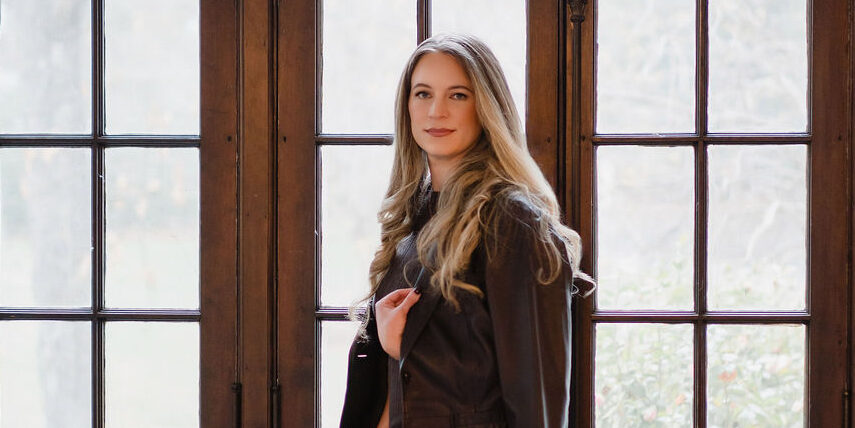


I'm a strategic advisor and diagnostic thinker obsessed with helping established coaches and experts build businesses that actually fit who they are, so they can keep more of what they earn and stop swimming against the current in their own business.
Glad you're here.
Hi, I'm Laura Schoenfeld
The brain behind the blog
